Page 1 of 2
Need a nice strong clutch plate - this happened to my last 1
Posted: Mon May 07, 2012 7:09 pm
by a_q
I run a Sprintex supercharged 4l engine which kicks out about 300lbf of torques.
I have been chasing a mysterious clutch/gearchange problem and eventually took it off - this is what I found...
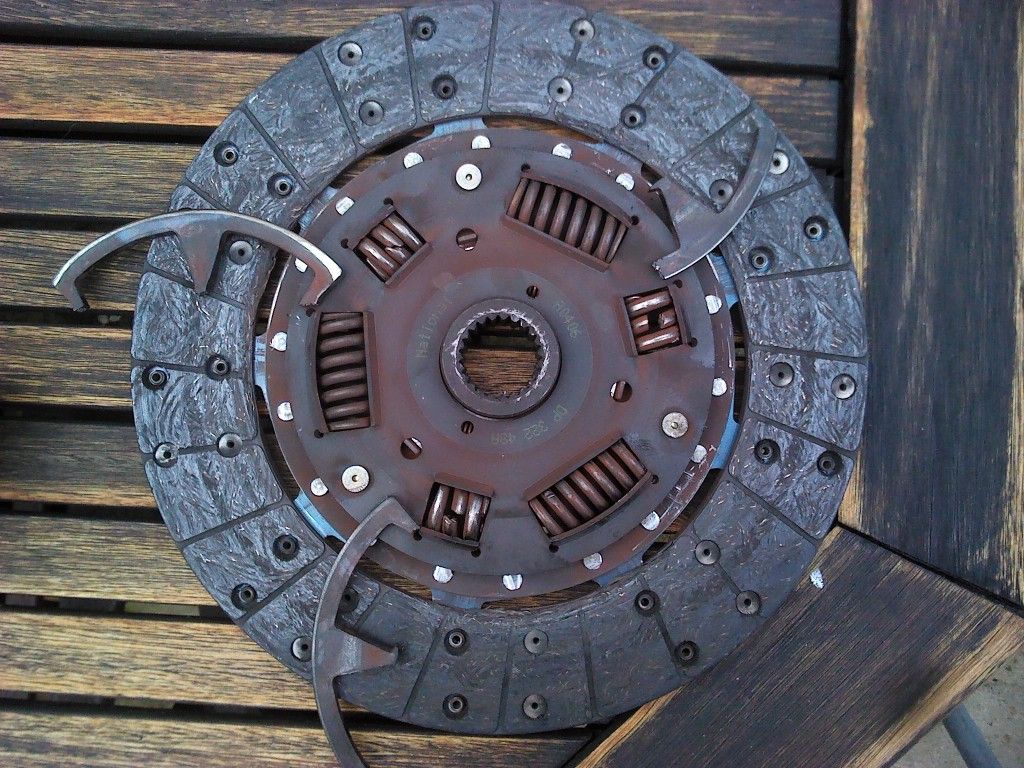
The bits of metal were stuck in between the friction plate and the pressure plate, causing the clutch to drag especially at high RPM.
This is a National clutch plate and lasted just over 20k miles. So I'd like recommendations for a new stronger plate - a clutch change is long and tedious on my car so I want it to last.
Posted: Mon May 07, 2012 9:01 pm
by a_q
P.S. It's a 9 1/2" clutch.
Posted: Wed May 09, 2012 7:29 am
by dbv8
I supose it depends on how much cash you have to spend.
I ran a John Eales ceremetallic plate for 3 years before the inner plate showed signs of wear. It was rated at 500lb/ft and i put near that through it regularly at the dragstrip.
I have a temporary Helix plate in at the moment that is also uprated to 500lb/ft. Its holding up and was tested running low 11's at York this weekend gone.
Posted: Wed May 09, 2012 7:49 am
by ian.stewart
Helix Clutches, they made a custom friction plate for me, never had a problem with it, that plate dosent look like an overpower problem but a problem caused by shock loading, give Helix a call and they will be able to make a specific plate to suit your needs.
http://www.helix-autosport.com/home/
Posted: Wed May 09, 2012 12:07 pm
by stevieturbo
I'm sure either AP or Helix will have something on the shelf.
Posted: Wed May 09, 2012 7:28 pm
by dnb
I have a Helix in mine. It seems to survive me abusing it with 350 ftlbs.
Posted: Wed Jun 06, 2012 6:31 am
by sidecar
Just found out that one of the springs is bust in my clutch. The drive plate looks the same type as the one in the picture. (My lump is a 4.6 stage III with NOS).
The Helix website looks good, I'll give them a ring.
To the OP....what drive plate did you end up using?
Cheers,
Pete
EDIT...Actually the part number on my plate is A0707, the one in the picture is different. The other number (D2-32248A is the same)
EDIT, EDIT....I spoke to Helix, they seem like good bods so I order a beefed up friction plate from them. Its a 9.5 inch organic plate. (not a Paddle plate). It suits a 1 inch 23 spline shaft. Part number 70-3380.
(£132 quid but if it works then that's fine by me!)
Posted: Sat Jun 30, 2012 9:21 pm
by sidecar
I tested my new Helix drive plate today, I am still using my old pressure plate and the clutch slips at anything over 4k in forth or fifth. The new plate does not have grooves cut in it unlike the old one. I've bunged the old plate back in and the clutch now does not slip. I'm wondering if the grooves make a difference.
Also why can a paddle clutch take more torque than a normal one?
I'll speak to Helix on Monday but any ideas welcome.
Posted: Sat Jun 30, 2012 9:31 pm
by stevieturbo
You need to ensure that the friction disc you use is the correct thickness for your cover or it will never work. And paddle clutches grip better because of the material used.
Posted: Sat Jun 30, 2012 9:49 pm
by sidecar
Cheers for the reply, I should have stated that the old Borg and Beck which is not slipping is 0.2mm thinner than the Helix plate. (which is 8mm thick). I would stick with the old plate but it has a broken spring.
Posted: Sun Jul 01, 2012 8:51 am
by DEVONMAN
sidecar wrote:Cheers for the reply, I should have stated that the old Borg and Warner which is not slipping is 0.2mm thinner than the Helix plate. (which is 8mm thick). I would stick with the old plate but it has a broken spring.
As Stevieturbo said, the plate thickness should be matched to the thickness that the pressure plate was designed for.
Unlike spring type pressure plates, a diaphragm type clutch actually applies more force as the friction plate wears and the pedal force get greater too.
I had a similar mismatch when I fitted a new thicker friction plate and I solved it by fitting 6 washers between the cover and the flywheel at the 6 fixing points. In your case the washers would need to be 0.2mm-0.3mm thick.
I know it's a bit of a band-aid but it worked for me and I was able to get to the clutch bolts one by one through an access in the belhousing without removing the gearbox.
Regards Denis
Posted: Sun Jul 01, 2012 9:03 am
by Robrover
Posted: Sun Jul 01, 2012 10:28 am
by stevieturbo
DEVONMAN wrote:
Unlike spring type pressure plates, a diaphragm type clutch actually applies more force as the friction plate wears and the pedal force get greater too.
That is not correct.
A diaphragm cover will increase pressure up to a maximum, then it falls off again.
So clamping could only increase with wear if that maximum had already been exceeded when new. Which no manufacturer would ever do
In normal operation clamping pressure is at a max when the plate is new as long as the cover's normal position hasnt been exceeded.
Ive tested a few covers for clamping force, they all behave in an expected fashion for any spring, except as a diaphragm has the ability to go beyond it's clamping range then fall, that's the only difference over a wire round wire spring which always increases the more it clamps, up to spring bind.
Posted: Sun Jul 01, 2012 10:58 am
by DEVONMAN
(Stevieturbo wrote)
So clamping could only increase with wear if that maximum had already been exceeded when new.
Maybe I should have added the words "up to a point"
In this case Sidecar has fitted a thicker plate and has therefore gone past th maximum pressure point and a worn thinner plate is giving him more clamping force.
Regards Denis
Posted: Sun Jul 01, 2012 11:06 am
by stevieturbo
Again without testing impossible to say that. If he had gone past enough for that to happen, there is a good chance the clutch would be dragging as your foot would no longer have the ability to make the clutch release, as you couldnt push the diaphragm far enough over centre to make it release.
Although that is also speculation, some setups may allow it. But if it was too thick, it should be easily felt under foot that the clutch is just wrong as the pedal would feel terrible, and you wouldnt feel the point where it travels "over centre" near the bottom of foot travel. As it would in effect always be over centre
Most friction plates Ive seen do tend to be in the 7-8mm range for a conventional single disc setup.
Of course that is a very wide range, most do tend to be close to 8mm though. It will depend how close to the clamping limit you are as to whether it can still grip though.